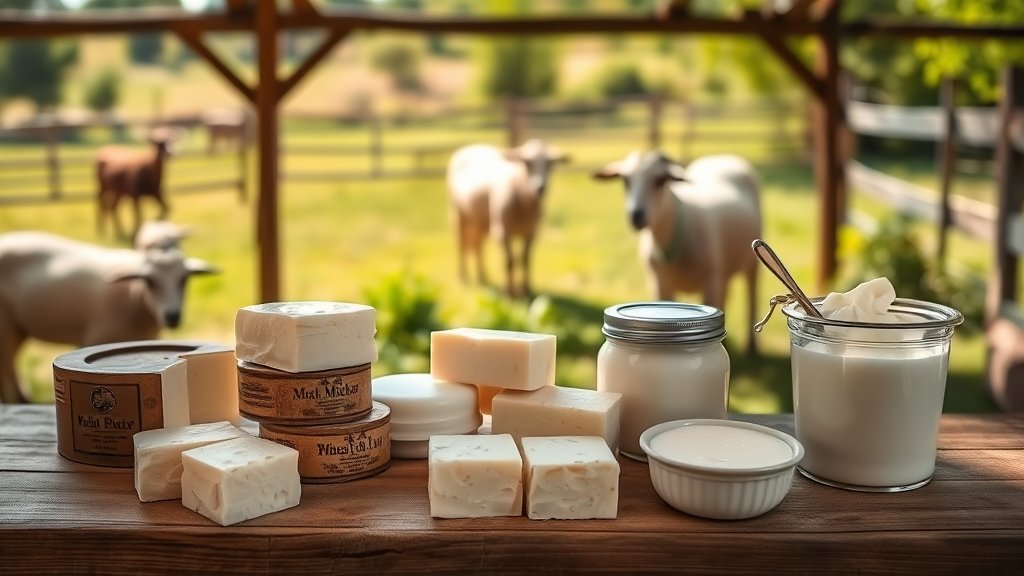
Goat milk in skincare? Yep, you heard it right. It’s not just for drinking or making cheese. Goat milk has been sneaking its way into lotions, creams, and soaps. Why? Because it’s loaded with vitamins and minerals that can do wonders for your skin. Think about it – Cleopatra supposedly bathed in the stuff to keep her skin looking fabulous. And if it’s good enough for an Egyptian queen, well, it’s worth a shot, right?
But really, goat milk’s magic comes from its natural fatty acids which help to nourish and hydrate the skin. It’s also got lactic acid, a gentle exfoliant that can help to smooth rough patches and reduce redness. Plus, it’s packed with vitamin A, a key player in maintaining healthy skin. So whether you’re dealing with dryness, acne, or even eczema, goat milk-based products might be your new best friends.
And let’s not forget the feel-good factor. Using goat milk in your skincare routine is like giving yourself a little luxury treatment at home. It has this rich, creamy texture that feels so indulgent on the skin. If you’re interested in exploring various applications of goat milk, you might want to check out Ausnutria CBM.And who doesn’t love a bit of pampering? So next time you’re browsing the beauty aisle, keep an eye out for goat milk products. Your skin just might thank you.
Health benefits of drinking goat milk
Drinking goat milk isn’t just for kids (pun intended). It’s actually packed with nutrients that can make a real difference to your health. For starters, it’s easier to digest than cow’s milk. That’s because the fat globules in goat milk are smaller, making it easier on your stomach. So if you’ve ever felt bloated or uncomfortable after drinking regular milk, switching to goat milk might be worth considering.
Then there’s the whole nutrient profile. Goat milk is rich in calcium, which we all know is essential for strong bones and teeth. But it’s also got a good amount of magnesium, potassium, and vitamin D – all crucial for maintaining overall health. And let’s not forget the protein content. Goat milk provides high-quality protein that’s essential for muscle repair and growth.
Beyond nutrition, goat milk applications are becoming increasingly popular in everyday health and wellness routines, from drinking it as a milk alternative to using it in fermented products like yogurt and cheese. And get this – some studies suggest that goat milk can help boost your immune system. It has this thing called oligosaccharides which can act as prebiotics, feeding the good bacteria in your gut. A happy gut means a stronger immune system. So yeah, maybe it’s time to give goat milk a try and see how it makes you feel.
Gourmet cuisine loves goat milk
When it comes to gourmet cuisine, goat milk is like that secret ingredient chefs can’t get enough of. It brings this unique flavor and creamy texture that’s hard to replicate with any other type of milk. Think about all those fancy cheeses like chèvre or feta – they owe their distinct taste to goat milk.
But it’s not just about cheese. Goat milk can be used in all sorts of dishes to add richness and depth of flavor. Imagine a creamy goat milk ice cream or a luscious panna cotta that melts in your mouth. Even your morning latte can get a gourmet twist with some frothy goat milk foam.
And it’s not just about taste – goat milk can be a great option for people who are lactose intolerant but still want to enjoy dairy products. Its unique properties make it easier to digest while still giving you that creamy goodness we all crave in our meals.
The role of goat milk in baby formulas
When it comes to feeding babies, parents want nothing but the best. And guess what? Goat milk is becoming increasingly popular as an ingredient in baby formulas. It’s closer to human milk in terms of composition compared to cow’s milk, which means it can be gentler on a baby’s digestive system.
Babies have sensitive tummies, and goat milk’s smaller fat globules and softer curds make it easier for them to digest. Plus, it’s naturally high in important nutrients like calcium and vitamin A, which are crucial for a baby’s growth and development.
There’s also some evidence suggesting that babies who are fed goat milk formula might have fewer allergies compared to those fed cow’s milk formula. While more research is needed in this area, it’s certainly something parents are considering when choosing what’s best for their little ones.
Sustainable farming with goats
Goats are pretty amazing when it comes to sustainable farming practices. They’re hardy animals that require less space and resources compared to cows. This makes them an excellent choice for small-scale farmers looking to produce dairy products without having a huge environmental footprint.
For one thing, goats are great at grazing and can thrive on land that isn’t suitable for other types of livestock. They help manage vegetation by eating weeds and overgrown plants, which can actually benefit the ecosystem by reducing fire hazards and promoting plant diversity.
Plus, goats produce less methane than cows, which is a big deal when it comes to greenhouse gases and climate change. By choosing goat farming over traditional cattle farming, farmers can contribute to more sustainable agriculture practices that are better for the planet.